
Reporting: How Integrated Reporting Creates Better Reports
The next reporting cycle is just around the corner. And with it comes not only the question of how companies can collect the required data and prepare it correctly, but also how they can communicate it clearly and effectively. After all, good communication does not end with the report.
With this in mind, our four-part blog series explores how subject-matter expertise can be transformed into clear messages, compelling design and communication tailored to specific target audiences. We begin by looking at why expertise, content and design should be considered together from the outset.
Reporting Requirements Have Become More Diverse
Annual reports, sustainability reports and other corporate publications are expected to fulfil multiple objectives at once: comply with regulatory requirements, make complex information easy to understand, convey key messages and give different stakeholders quick access to relevant content.
This makes reporting an interdisciplinary task. A report that is technically sound is not automatically an effective communication product. Only when content, structure, editorial work, design and technical implementation come together can corporate communication truly make an impact.
Many Disciplines, One Shared Outcome
Producing a report often involves many different contributors: specialist departments provide data and content, external consultants support with regulatory matters, designers develop the visual concept, and technical service providers handle production and publication.
This can quickly result in additional coordination loops and interfaces, particularly when design and communication only come into play once the structure and content have largely been finalised.
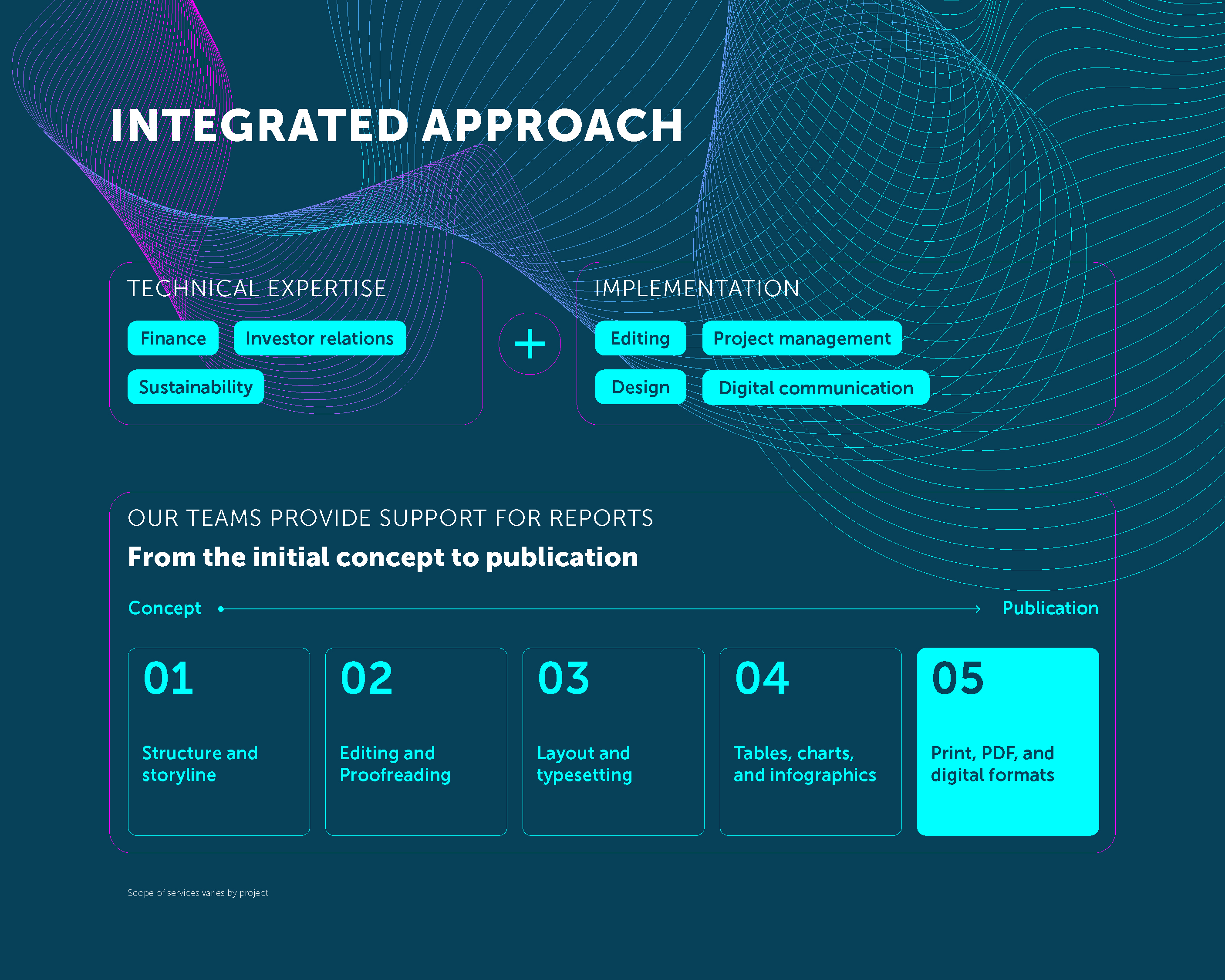
That is why we take an integrated approach. Our teams combine expertise in Finance, Investor Relations and Sustainability with editorial, project management, design and digital communication capabilities. This allows us to support reporting projects from initial concept through to publication.
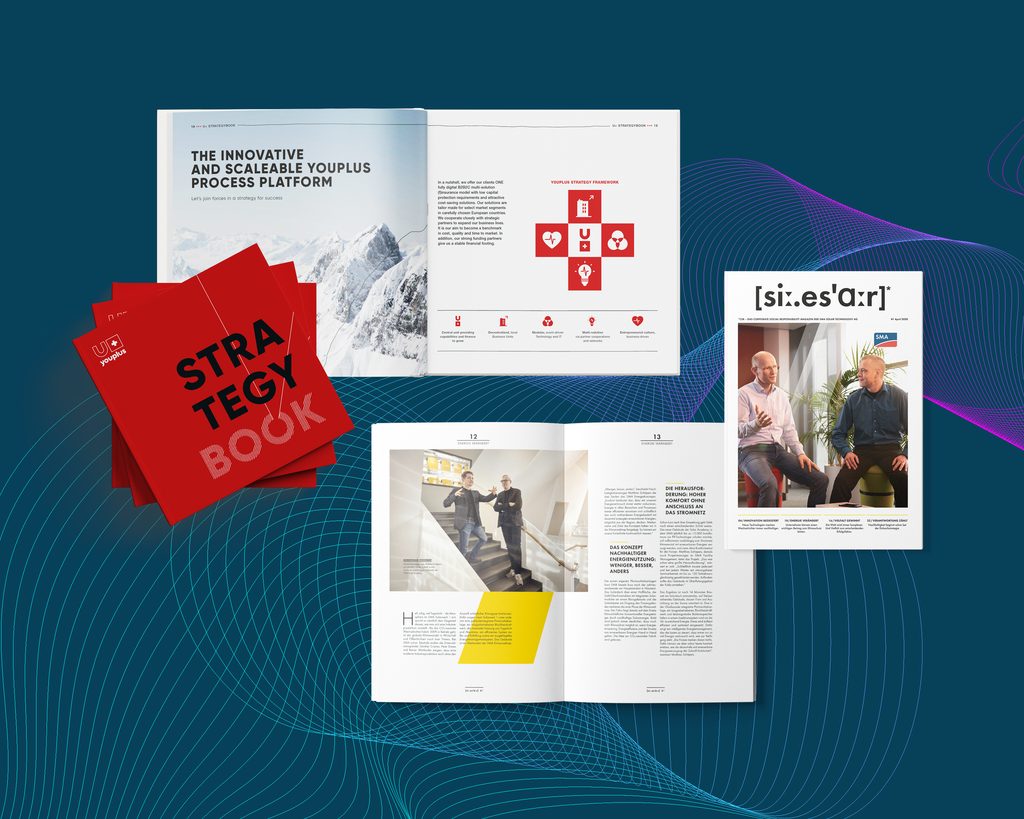
Depending on the project, this can include structure and storyline development, editorial services and proofreading, layout and typesetting, tables, charts and infographics, as well as print, PDF and digital formats.
Complexity Requires Visual Guidance
Financial and sustainability reports contain a high density of information. KPIs, strategic relationships and regulatory information all compete for attention.
Good information design helps structure this complexity. Typography and page architecture provide orientation, tables make figures easier to compare, and infographics make complex relationships visible and accessible.
Design is therefore not something added to finished content as a final embellishment. It is an integral part of communicating information.
Print, PDF or Digital? The Objective Determines the Format
The question of the right format should also be addressed early on.
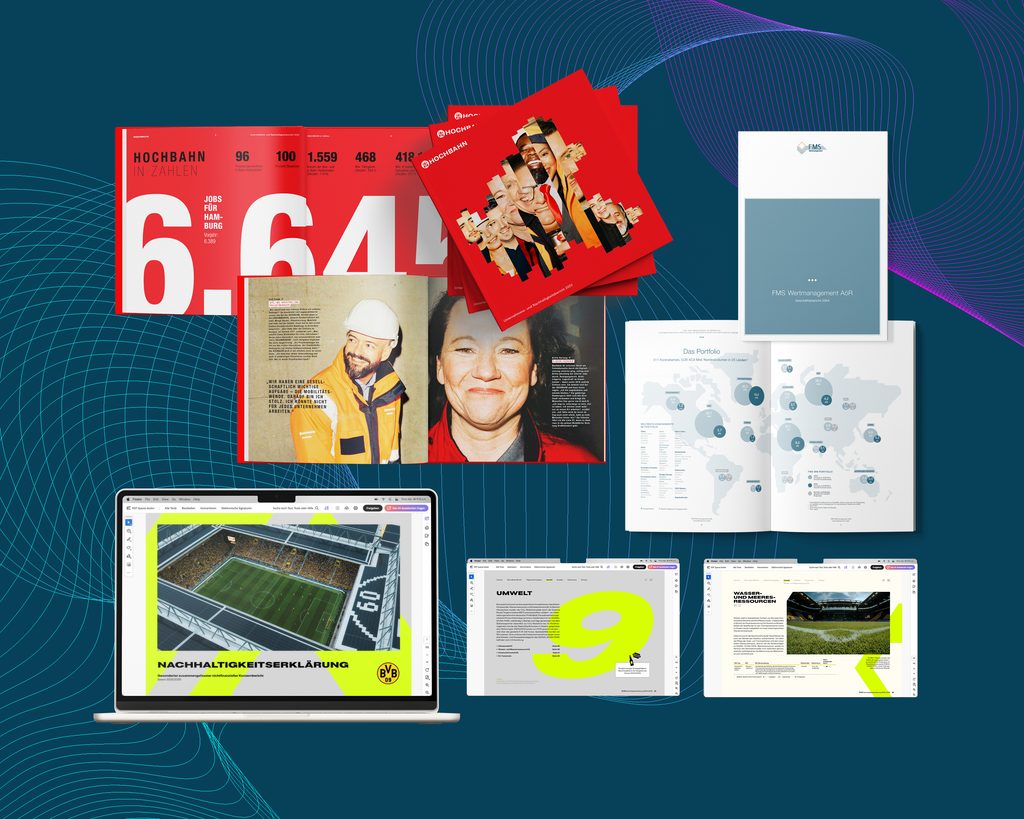
A traditional report in PDF or print format may still be exactly the right solution. At the same time, many users expect fast, mobile-friendly access to corporate information.
Digital reporting solutions can provide a valuable complement. Content can be prioritised and interconnected, while animations, videos and dynamic visualisations can enhance the user experience.
With our One Digital Report (ODR), existing reporting content is transformed into a digital, audience-focused experience that provides easy access to the most important messages and key figures.
The aim is not to use as many digital possibilities as possible. The format needs to suit the target audience and the communication objective.
One Report Provides Content for More Than One Channel
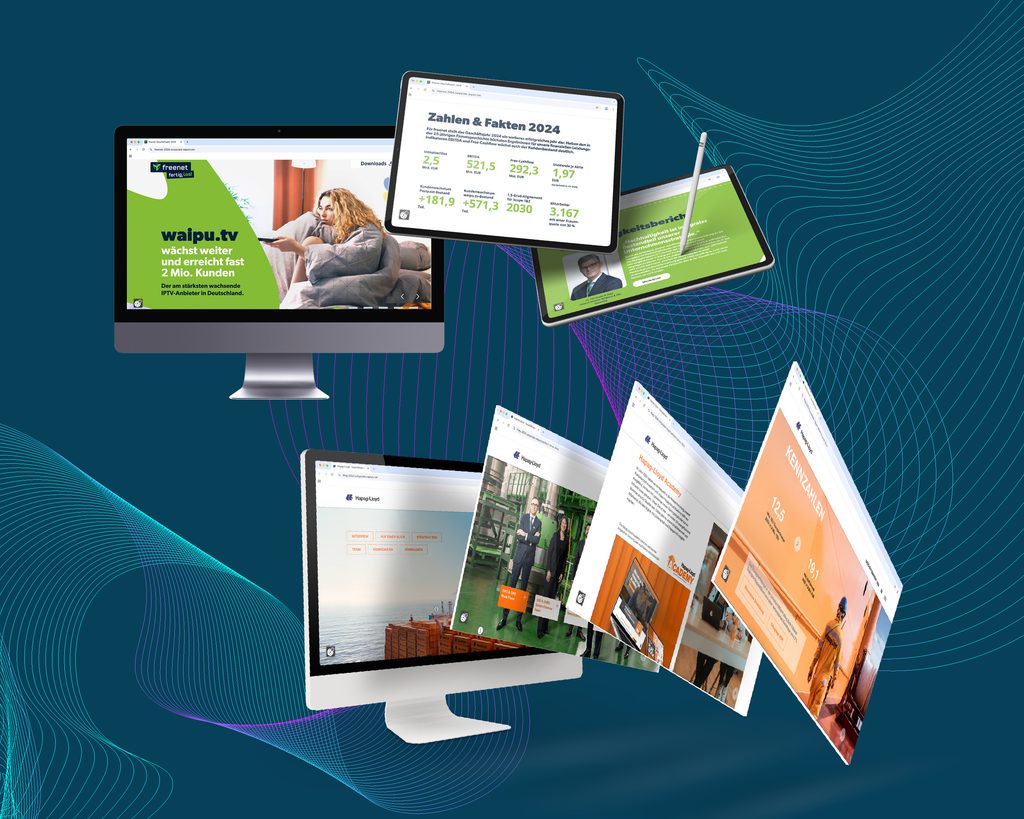
Annual and sustainability reports contain a wealth of valuable content. So why use it exclusively within the report itself?
A key graphic can be repurposed for a presentation, while strategic messages can become social media content. Sustainability topics can be adapted for employees or prospective candidates, and key figures can be reused in a key facts brochure or on a landing page.
In this way, reporting becomes the starting point for broader corporate communication.
Conclusion: An Integrated Approach Reduces Interfaces and Connects Expertise with Execution
For us, this is precisely where the value of an integrated approach lies: our experts in Finance, Investor Relations and Sustainability work closely with our Communications & Design teams. This means that technical requirements, key messages and visual communication are considered together from the very beginning.
The result is not simply a better-looking report. It is reporting that is technically robust while also reaching the people it was created for.
Planning Your Next Annual or Sustainability Report?
Would you like to bring reporting expertise and communications execution together rather than managing them separately? Talk to us about how we can support your next reporting project – from concept development and editorial work to design and data visualisation, through to digital or print publication.
Get in touch – we look forward to hearing from you.

Meike Speckin
Senior Art Director

